Art in Haughmond

This week, the children have been drawing back on their learning about installation art and using this learning to create 3D piece of art, focussing on the shape and scale of the space they have been given to create a piece of art. They have been designing a mini room, using a box and paper for the walls, ceiling and floor, and have thought about what installations they would be able to put in their room. They have worked in groups, focussing on creating the walls. They have created their decoration based on explosive art, using a variety of media to make their work as eye-catching and thought provoking as possible.

PSHE in Haughmond

This week, the children have been learning about, identifying and understanding situations around prejudice and discrimination. The children came up with role play situations where they could put the situation right, making sure that all parties were happy, and understanding the fact of the diverse world we live in, welcoming and celebrating differences.

Art in Wrekin using space and scale

Following on from last week, we have installed our work into ‘galleries’ to consider how it would look taking into account scale and perspective. What do you think?


Art in Wrekin

This week in Art, Wrekin have been looking at instillations. We studied the work of Cai Guo-Qiang, who makes explosive instillations in the real world.

We tried to create a similar effect using paint splats, throwing glitter and paint-soaked tea bags and finally by using charcoal to create positive and negative spaces. Here are some photos of the process…


English in Haughmond

In Haughmond, last week, the children began to look at writing diary entries, as their new unit of work. One key part of writing a diary entry is being able to write in paragraphs. The children had a task of putting sentences together that related to each other, to form paragraphs. They then decided which order the paragraphs went in, using adverbial starters to help them, to allow the children to place the paragraphs in the correct order, so the diary entry flowed cohesively. The children worked really hard!


Wrekin’s last week

This last week has been a busy one in Wrekin. We have done a lot of work in our STEM subjects; from using our computing and networking skills to create persuasive presentations based on our English work, to creating our own casein plastic and using it to test different hypotheses. It hasn’t all been science and technology though- we have created our final portrait pieces in our Art this term and had a lot of fun exploring the way that different media could create different effects. Take a look at some of our mixed media portraits. We think they look great!

Science in Haughmond

This week, Haughmond class have been taking part in an experiment on reversible and irreversible changes. Here, you can see them working with Miss Wilson to see which changes can be reversed or if the change is irreversible, by burning different materials and seeing what happens to them.

Irreversible Reactions in Stiperstones

In Science this week, Stiperstones pupils blew up balloons without touching them, and made a form of plastic that was used in the past to make buttons, buckles and pens.

We were learning about irreversible chemical reactions, and about the new materials that can be formed by them. The carbon dioxide made during the reaction between vinegar and bicarbonate of soda can be captured and used to blow up a balloon. Vinegar can also be added to hot milk to make plastic from the protein, casein, found in the milk.

Our classroom did smell rather strange after all of this chemistry, though!

Haughmond Art

Here, you can see the children putting together their final piece. Over the term, they have been looking at developing self-portraits using a variety of techniques, media and resources.

World Book Day in Haughmond

Haughmond class had a great day dressed up as their favourite book characters. It was also really nice having some of the parents involved with helping the children to decorate a potato as their favourite book character. The main focus of the day was for the children to imagine they had entered a scene of their favourite book. They then had to write/draw the next part of the story in a comic book style to include themselves in it. Also, the children loved the idea of when the bell rang, they had to drop everything and read! What a brilliant day!

World Book Day in Stiperstones

Stiperstones have had a fantastic World Book Day, sharing our favourite books. The day started with a ‘Potato Parade’, in which we each decorated a potato to represent a book character. Thank you so much to those parents who came in to join us with this activity, and who successfully guessed so many of the characters shown in this unusual way!


Later in the day, we considered what it would be like if we were swapped with a book character. First we created ‘Wanted’ posters to find each character if they escaped from their world into ours, and then created a storyboard for how the plot would develop if we arrived in our selected book in the character’s place. It has been a great opportunity to celebrate and discuss books and reading.

World Book Day in Wrekin

This week was World Book Day. Wrekin completed many different activities around our favourite books but our favourite was decorating potatoes as book characters. Can you guess who they are? We would also like to say thank you to the grown ups that joined us.


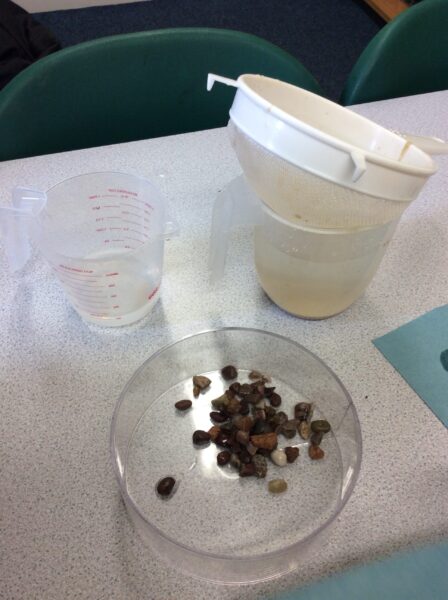
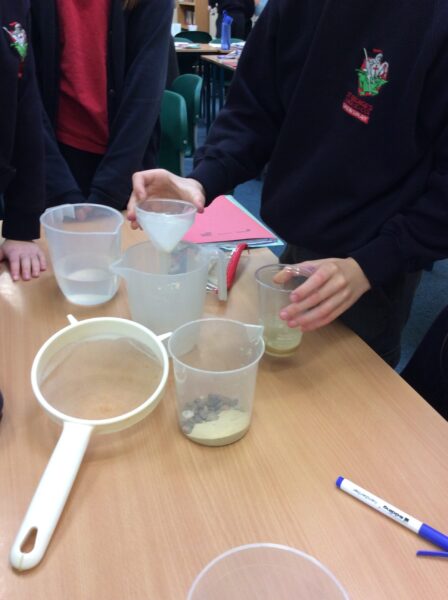
Separating Mixtures in Stiperstones

Year 5 is continuing their topic of ‘Properties and Changes of Materials’ in Science this half term. Having investigated which materials were soluble in water, and recovered dissolved solids through evaporation, Stiperstones were ready to tackle the problem of how to separate different mixtures.

Using a range of sieves, funnels, filter paper and jugs, the class worked in groups to separate 3 mixtures. These were sand and salt; sand and stones; and finally sand, water and stones. The sand was easy to separate from the stones using a sieve when both were dry. When the particles of solid were very similar in size, as in salt and sand, we exploited the fact that salt is soluble in water to dissolve the salt and then filter out the sand. Finally, we had to use almost all our equipment and some patience to separate out the mixture of water, sand and stones.
 

Art in Haughmond

This week, Haughmond class have been looking at creating portraits using mixed media. They created a background wash with water colours, experimenting with seeing how far they could stretch a colour by just painting one thick stroke of the colour one side of the page, and then pulling it across the page with water on their paint brush. They then had a look at doing this with two colours and meeting them in the middle of the page. The children also looked at painting a background wash with unlimited access to their chosen colour and then use a contrasting colour and used the bristle of the paint brush to splatter this across the page. Another technique the children practised was placing salt on top of a background wash and spreading the salt around the page with a paint brush to create a different texture. Once their chosen background had dried, they used their portrait tracing from a previous activity to draw their portrait onto the background. They had come up with vocabulary to describe themselves and their interests and wrote this onto the lines of their portrait. The children had great fun completing this activity. Please see some examples below!


Paws-ing for breath in Wrekin

This week in Wrekin, we have been doing some brain training as part of our Pawsb programme. We have been learning about the four main parts of the brain and what they do as well as exploring the idea that we can train our brains just like a muscle.

We ended the session with some mindfulness and breathing activities- a very calm way to end a busy week of hard work!

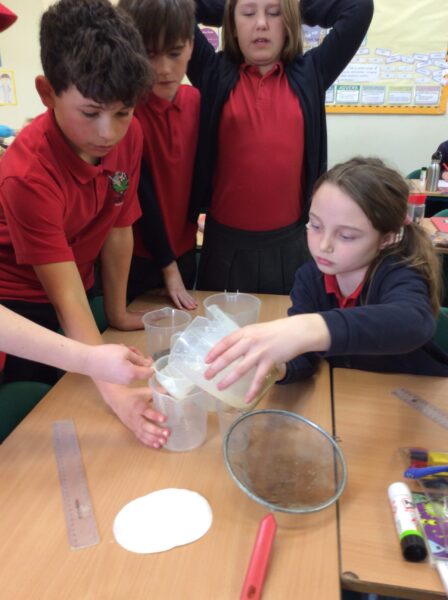
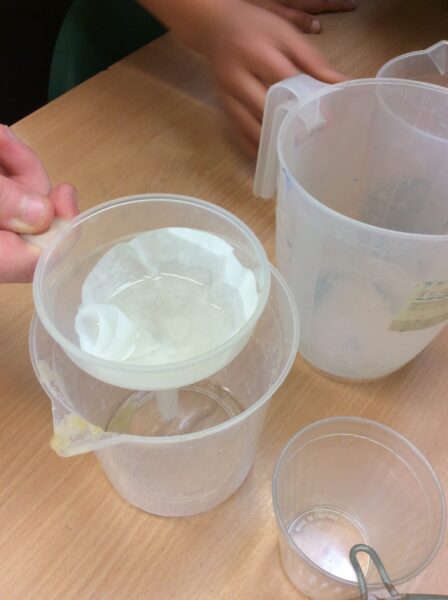
Science in Haughmond

Last week, Haughmond class looked separating mixtures. The children were given three different mixtures (sand and salt, sand and stones, and sandy, pebbly water). They discussed what processes they could use (sieving and filtering) and then used sieves, filter paper, plastic containers and the above mixtures to complete the experiment, noting down their findings and discussing them with the class. Below, you can see them taking part in the experiment which they all enjoyed!

New Geography Topic in Stiperstones

Stiperstones class have had a really busy week, celebrating everything that we have already learned about in Year 5 in our class assembly and also starting our new areas of work for this half term. One of these is our new Geography topic, in which we will be studying the human and physical geography of Northern Ireland.

This week we focused on the location of Northern Ireland, from working out that it is in the North-Western part of the continent of Europe to identifying that both Northern Ireland and the Republic of Ireland are on the same island.

We enjoyed using Digimaps on the whiteboard to zoom in from world maps right down to individual towns, and then used atlases to locate places and features that we already knew about in and around the United Kingdom. The class is really looking forward to finding out more.


Darwin Day in Haughnmond

Haughmond class worked really well, exploring biomes and habitats around the Galapagos Islands, a destination on Charles Darwin’s journey around the world on HMS Beagle. They looked at the location of the Galapagos Islands, an archipelago off the coast of Ecuador, a country on the continent of South America. The children mapped the structure and formation of the Galapagos Islands, in preparation to learn about the biomes and habitats present on the Galapagos Islands, today. The children also sketched some of the animals that live on the Galapagos Islands, many of which Charles Darwin discovered or named. Below, you can see examples of the work completed.

Darwin Day in Stiperstones

Stiperstones came dressed for science action on Darwin Day, sporting lab coats, animal costumes or themed clothing and objects.

During the day, we found out about the Galapagos Islands, linked with Darwin’s famous theory of evolution due to the extraordinary adaptations he observed in the creatures that lived there. The beautifully-illustrated picture book ‘Island: A Story of the Galapagos’ gave us an insight into how the many islands of the Galapagos form, become colonised by plants and animals and then change over time. We learned about the many habitats that the islands provide, and researched some of the unusual species who live in them, such as the Galapagos tortoise, the squat lobster and the lava lizard. Like Darwin and his companions, we recorded our discoveries in notes and sketches.

Year 5 Boys Football

On Monday 5th February, the Year 5 Boys football team represented the school in the U10 Boys County competition. The boys did the school proud, playing in a tough but respectful way, showing great sportsmanship and support. The team won 1 game, drew 2 and lost 2, finishing third in their group.

Well done Henry, Max, Toby, Percy, Dougie, Thomas, Joey, George and Harry.


A busy week in Haughmond class!

Haughmond have been working hard on their innovated adventure stories, carefully selected ambitious vocabulary and making sure they have a range of sentence structures (relative embedded clauses, subordinate clauses, fronted adverbials…) to make sure their writing is as exciting as possible. Lots of improved handwriting has been seen, too!

The children have their class assembly next week and have been working hard to compile a range of activities to share with their parents to show off all the brilliant learning that has been happening! The children are looking forward to when the parents are invited in to share their learning successes!

Frog Club in Stiperstones

Children in Stiperstones class are making brilliant progress in Frog Club. Our display is having to be updated constantly as children ‘hop’ up from stage to stage each week.

Each week, the children are becoming faster and more fluent in recalling their times table multiplication and division facts. This is proving very useful as we learn trickier written calculation methods, such as long multiplication and short division, and when calculating fractions of numbers.

Thank you very much to everyone involved for your hard work, as we know that this progress reflects children’s practice at home as well as at school!


History in Wrekin

This week, we have been exploring how Vikings lived their everyday lives. We spent a lesson investigating how they made their clothes and what they chose to wear. We looked at the different plants used to dye cloth and even had a go at some Viking techniques. Can you spot our weaving and our finger braiding?

Artefact exploration


 This week, Wrekin explored Viking artefacts and drew conclusions about how people would have lived. We looked at objects such as coins, clothing and even games. We compared them to what we have today and found that there were actually a lot of similarities, which surprised us! 

Guided Reading in Haughmond

This week, in Haughmond, the children focussed on the effect that an author’s words had on them, as readers. They focussed on a short section of the current class story ‘She Wolf’ by Dan Smith and acted out the characters words, facial expressions, body language and movement within the section of the text. The children discussed how they felt acting the scene out and how the character would have felt in that situation, if it were in real life. They also picked out vocabulary that would remind them of an emotion or even make them feel an emotion, when they read the word.

Viking Artefacts in Stiperstones

Following our exploration of Anglo-Saxon artefacts before Christmas, Stiperstones class received a further box of objects to investigate. This time, the artefacts related to everyday Viking life. We used our inference and prediction skills to work out what each object could have been used for, and explained what skills a Viking would have needed in order to make the originals.

We were particularly interested in similarities and differences between these Viking artefacts and those from the Anglo Saxon era. Many were very similar in terms of the types of object and the materials used. However, the objects related to religion were very different – this time, we had a mask of Thor, the Norse god, while last time we had a model of a carved stone cross, indicating that many Anglo-Saxons were Christian.

English in Haughmond

This week, the children have been learning their new model text called ‘ The Journey’. They have been using story maps and actions to retell the story and referred to this learning when discussing the structure and features that an adventure story (fictional narrative) should have.