And the results are in…

Stepping out stage 1 – the practice walk

3D shapes

This week, Year 3 have been investigating 3D shapes by exploring their properties and examining their nets. Using this knowledge, Wenlock Class built their own 3D shapes using a range of construction materials.

Untitled

There are no new spellings for the holiday period but children could recap previous spelling patterns learnt.

Easter holiday homework

There are no new spellings for the holiday period but children could recap previous spelling patterns learnt.

There are also some links below to our summer topic if you would like to do some research:

https://www.bbc.com/bitesize/topics/zcyycdm
https://www.bbc.com/bitesize/clips/ztfnvcw
https://kidshealth.org/en/kids/htbw/
http://www.atschool.co.uk/keystage2-ks2/science.asp?section=8756
http://www.scienceforkidsclub.com/bones-and-skeleton.html

We built a pond!

In Wildlife Club, we have been researching frogs and how to build ponds. We decided to design a mini-pond for the wildlife area as we had been offered some frogspawn. We collected the materials needed, dug the hole and filled the pond with stones and logs. We are hoping for some rain to fill the pond so that the frogspawn can begin to change into tadpoles. We will develop the area with plants to make a suitable habitat for the young frogs as they grow and become independent.

Position and direction

In maths, Wenlock Class have been exploring the directions of a compass and clockwise and anticlockwise directions. We also looked at 1/4, 1/2, 3/4 and full turns and how a right angle is a 90 degree turn. We used our Pacman measures to discover if objects had right angles.

Environment Day

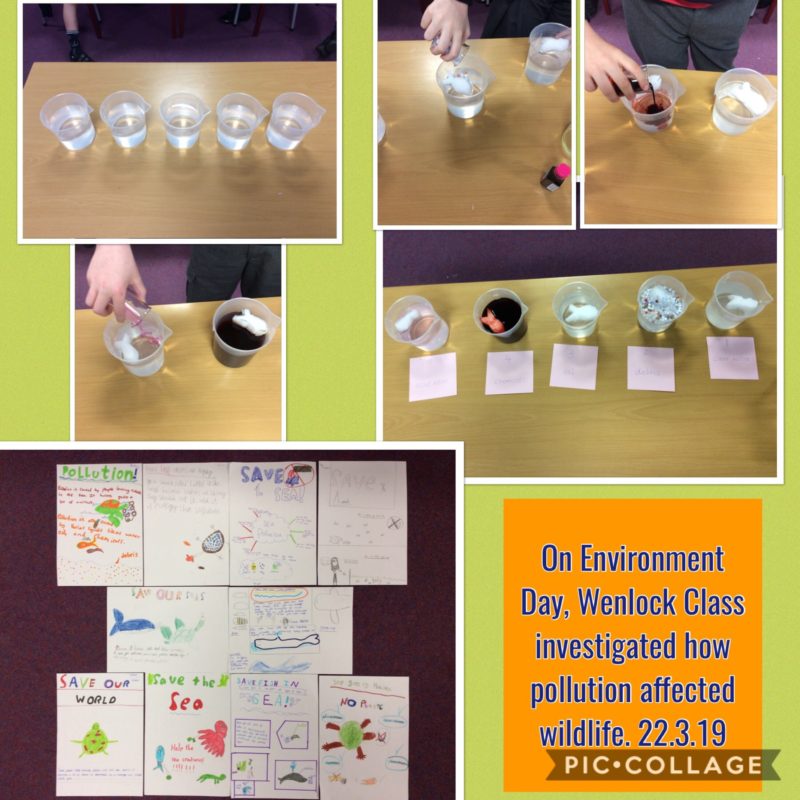
On Environment Day, Year 3 investigated how pollution affects wildlife. In particular, we focused on sea creatures and water pollution. We learnt about debris, oil slicks, chemical waste and acid rain – how these substances entered the water system and how they impacted on the flora and fauna of a habitat.

Then we designed posters to raise awareness of environmental issues.
Developing our story telling skills…

Position and Direction in the Sunshine!

Anglo-Saxon Day in Clee

Today, we had a fantastic time learning about Anglo-Saxons in a very hands on way! We got to be Anglo-Saxon builders, Anglo-Saxon animals and Anglo-Saxon cooks. This required a whole range of skills, and Clee class did an amazing job of working together to complete the challenges. Well done Clee class!


Willstone’s shadow art

Science day in Willstone

Willstone’s visit from the Fire service

Willstone Anglo-Saxon Day

Research into local flooding

For additional learning this week, we have set a challenge to find out what causes flooding and how it impacts on the wildlife and economy locally. Children might have noticed the flood barriers or the waterlogged land around Shrewsbury; you may have discussed local newspaper reports or about how the flooding has impacted on your homes or businesses.

Children can draw pictures, take photographs or write reports to showcase their learning to share with us at school.

Anglo Saxon Day for Wenlock Class

Wenlock Class had a fantastic day experiencing life as an Anglo Saxon. They had to find ways of building a structure for shelter with limited materials and used problem solving skills to transport supplies, construct a wattle wall and fill it with daub. After lunch, the structures were finished and evaluated then the children gave their hands a good scrub to get them clean. Next, Mr. Russell built a fire and everyone made a dough from flour and water. The dough was flattened into a disc shape and fried on the fire. It tasted delicious with a drizzle of honey on top!

Problem solving in Wildlife Club

In Wildlife Club this week, we noticed that the persistent rainfall had caused the trays containing our seed plant pots had flooded. We removed the plant pots and put them in the large school planters to prevent further over-watering then predicted which tray had the largest volume of water. The children suggested a range of methods to calculate, including gauging by looking, measuring with rulers and using finger spans. When asked how they would measure more accurately, they decided to pour the rainwater into a measuring jug to check the amounts.