CUSP Science
Curriculum context: Our whole‑school science curriculum, aligned with the CUSP framework, provides a coherent, knowledge-rich and thoughtfully sequenced programme that enables all pupils to build a secure and connected understanding of key scientific concepts. Through consistent instructional approaches, explicit vocabulary teaching and regular opportunities for retrieval, pupils develop strong, lasting scientific knowledge that grows cumulatively over time. Practical enquiry is embedded throughout, allowing children to apply disciplinary skills and think scientifically within a structured and inclusive learning environment. Across the school, CUSP ensures high expectations, consistency of practice and a clear progression of substantive and disciplinary knowledge, equipping all pupils to confidently understand, question and engage with the scientific world.
|
Autumn |
Spring |
Summer |
| Year 3 |
Rocks
Animals, including humans
Revisit Rocks |
Forces and magnets
Plants |
Plants continued…
Light |
| Year 4 |
Living things and their habitats
States of matter |
Animals, including humans |
Electricity
Sound |
| Year 5 |
Properties and changes of materials
Animals, including humans |
Forces (Gravity and Galileo)
Earth in space |
Living things and their habitats
Forces continued |
| Year 6 |
Electricity
Animals including humans
(circulatory system) |
Animals including humans
(water transport)Light |
Living things and their habitats
Evolution and inheritance |
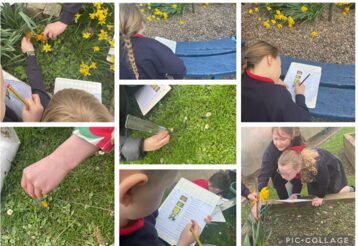
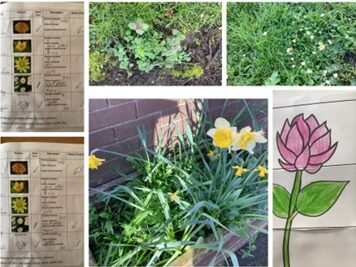
Scientific analysis is developed through IPROF criteria. We call it ‘Thinking Scientifically.’
- identifying and classifying
- pattern seeking
- research
- observing over time
- fair and comparative testing
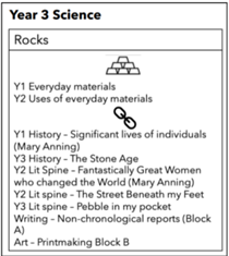
Curriculum connections: support teachers to build cumulatively and coherently on prior learning. They support relevant, deliberate and precise revisiting across the wider curriculum.
Teaching and learning:
CUSP prioritises knowledge-rich learning, high expectations, and consistent instructional approaches and naturally supports our visions on excellence, equity, and deep understanding. Its carefully sequenced content helps our school deliver a curriculum where learning builds over time, aligning with visions focused on progress, mastery, and long‑term retention. CUSP’s emphasis on explicit vocabulary teaching, retrieval practice, and well‑structured lessons supports visions that promote high-quality teaching and inclusive access to challenging content for all learners. The strong focus on disciplinary skills—such as questioning, investigating, and evaluating—also complements visions that aim to develop curious, independent thinkers. Finally, the curriculum’s built‑in opportunities for professional development, consistency across year groups, and robust monitoring align closely with school visions that value staff expertise, collaboration, and continuous improvement.
Vocabulary is the golden thread that sits at the heart of the CUSP Curriculum, mapped out from the EYFS to Year 6 within and across subjects.
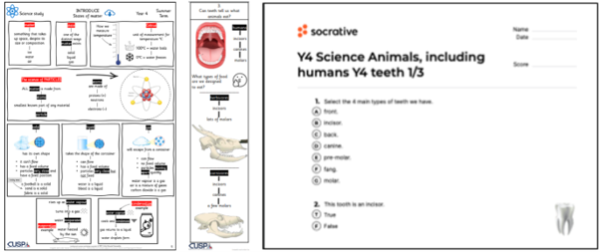
CUSP Science resources contain a wealth of evidence-led materials to support excellent teaching and long-term learning.
How the Subject Leader monitors and evaluates the curriculum:
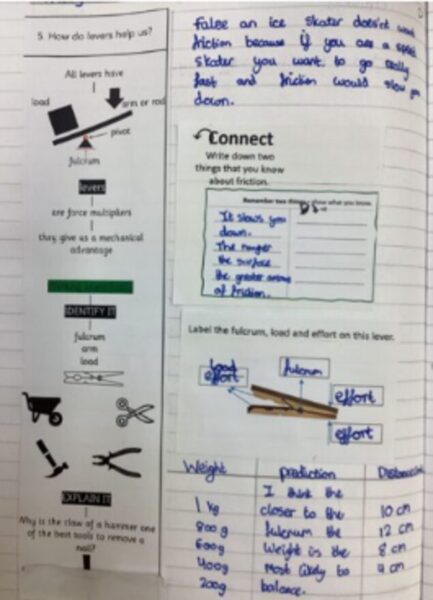
We use Pupil Book Study (Alex Bedford, published by John Catt) to evaluate the impact of the curriculum on the lived experience of pupils.
CUSP monitors and evaluates the curriculum through ongoing retrieval practice, low‑stakes assessments, and diagnostic checks that highlight gaps and misconceptions, enabling responsive teaching. Subject leaders use lesson visits, book reviews, and pupil discussions to assess how effectively teaching aligns with the intended sequence and whether pupils are building secure, connected knowledge over time. Regular checks on progression, vocabulary acquisition, and disciplinary skills ensure the curriculum remains coherent and ambitious, while feedback loops and targeted professional development help maintain consistency and high-quality delivery across the school.